
Running a Global Acute Stroke Trial: Lessons from the ImpACT-24B Study
The phone could ring at 3 AM. That was the point.

There is a narrow window after a stroke. Not a metaphorical one - a real, biological, ticking window. In the case of the ImpACT-24B trial, the treatment had to be delivered between 8 and 24 hours after stroke onset. Miss that window and the patient was out. No exceptions.
That meant that somewhere, at any hour of the day or night, a stroke could happen - and our team had to be ready to respond.
Not "ready during business hours." Not "ready Monday through Friday." Ready. Full stop. At 3 AM on a Sunday in January. On a public holiday. During a power cut. When the principal investigator was in surgery and the study coordinator was covering three other trials simultaneously.
That is what it actually means to run a 24/7 acute stroke trial. And it is very different from what it sounds like on paper.
The Study
ImpACT-24B was a pivotal, international, randomized, double-blind, sham-controlled trial testing a device developed by BrainsGate - an Israeli neurotechnology company with a radical idea: that electrically stimulating a small nerve cluster at the base of the skull, called the sphenopalatine ganglion, could increase cerebral blood flow and improve recovery after an ischemic stroke.
The hypothesis was compelling. Preclinical data was strong. A pilot study had shown promise. Now it was time to prove it - or not - in the largest, most rigorous trial the technology had ever faced.
The study enrolled more than 1,000 patients across 73 centers in 18 countries and remains one of the largest global neurostimulation studies conducted in acute stroke. The results were eventually published in The Lancet in 2019, one of the world's most prestigious medical journals.
Behind that publication was a logistical effort that most people will never see and that no journal abstract comes close to capturing.

What Made This Trial Genuinely Difficult
Most clinical trials are hard in predictable ways: recruitment is slower than expected, a site has data quality issues, a regulatory submission takes longer than planned. You build in contingency, you manage it, you move on.
This trial was hard in a different way. The difficulty was structural. It was baked into the very nature of what was being tested.
Stroke is not a scheduled event. You cannot send a reminder. You cannot plan enrollment around clinic availability. A patient arrives in an emergency department in the middle of the night, imaging is performed, the stroke is confirmed, the clock starts, and from that moment, every hour matters.
For the ImpACT-24B protocol, the treatment window started at 8 hours post-onset and closed at 24 hours. That is not a long time. In practical terms, it meant that every single participating site had to maintain full activation readiness around the clock, every single day, for years.
Think about what that actually requires.
It requires an investigator who is contactable and willing to respond at any hour. It requires a coordinator who knows the protocol well enough to screen a patient correctly under pressure, in the middle of the night, without making mistakes that would disqualify the enrollment. It requires a device that is ready to use, implantation kits that are stocked, and randomization that can be accessed immediately. It requires an implantation procedure that happens in real time, not the next morning when everyone has had coffee.
Multiply that by 73 centers across 18 countries, each with its own hospital culture, its own night-shift staffing model, its own language, its own relationship to emergency medicine. And then hold all of it to the same GCP standard, the same protocol, the same data quality expectations.
That is the operational reality of this trial. And someone had to build the infrastructure to make it work.
Training for a Procedure No One Had Done Before
The device itself added another layer of complexity. Delivering sphenopalatine ganglion stimulation is not a standard neurological procedure. It involves placing a small injectable implant through the hard palate, positioning it precisely using real-time optical guidance, and then activating it through an external controller placed against the patient's cheek.
Investigators had to learn this. Not just conceptually - procedurally. They had to be trained, assessed, and certified before they could enroll a single patient. And that training had to be maintained. If a site's primary investigator left, their replacement had to be trained before the site could continue. If a certified investigator hadn't performed the procedure in a while, refresher training was required.
This meant a continuous, rolling training program running in parallel with the trial itself. Our medical team - physicians, not just project managers - was embedded in this process. Understanding a procedure at the level required to train others, to monitor for protocol deviations, and to catch a subtle technique error in a monitoring visit report requires clinical knowledge. It requires people who have been in clinical environments and understand how procedures drift under the pressure of a busy emergency department.
That is not something you can outsource to a training vendor and then walk away from.

The Real-Time Guidance System
One of the most demanding operational elements of ImpACT-24B was something that most clinical trial professionals have never encountered: real-time, live optical guidance for the implantation procedure.
To place the device correctly, the investigator used an optical system that provided live feedback on electrode position. This was not a stand-alone piece of equipment that a physician could operate independently. In many cases it required coordination - between the investigator performing the procedure, the technical support, and the guidance system itself - in real time, in an emergency setting, with a stroke patient on the table.
Think about the coordination this demands. You have a physician performing a procedure they have only done a limited number of times. You have a stroke patient, possibly confused, possibly frightened, with a time window that is actively closing. You have a guidance system that needs to work perfectly. And you have a CRO whose job it is to make sure that everything is documented, that the protocol is followed, that the data is captured correctly, and that if anything goes wrong there is a clear and documented record of what happened and why.
Our monitoring teams were trained specifically for this. They understood the procedure. They knew what correct electrode placement looked like in the optical readout. They could identify a potential deviation before it became a protocol violation. And they were genuinely, reliably reachable when sites needed support outside normal hours.
The Moments No One Writes About
There were nights when a site called because a patient had presented in the enrollment window, and they weren't sure whether the patient met all the inclusion criteria. That call couldn't wait until morning.
There were moments when equipment issues arose and the question was whether this affected the validity of the data and how to document it. There were situations in which a site's IRB requested additional information mid-trial, and the path forward required navigating a regulatory conversation in a language other than English, with a committee that operated on its own schedule, without disrupting enrollment.
Every one of those moments required someone who knew the protocol, knew the site, knew the regulatory context, and could make a sound decision quickly. Not a decision that protected the CRO. A decision that protected the patient, protected the data, and kept the trial moving.
What the Data Showed
The ImpACT-24B results were published in The Lancet on July 20, 2019. The primary endpoint, improvement in functional outcome across the full population, did not reach statistical significance. Clinical trials are honest like that. Sometimes the hypothesis doesn't fully hold up.
But within the population of patients who had imaging evidence of cortical involvement at the time of their stroke - a pre-specified subgroup - the results were meaningful.
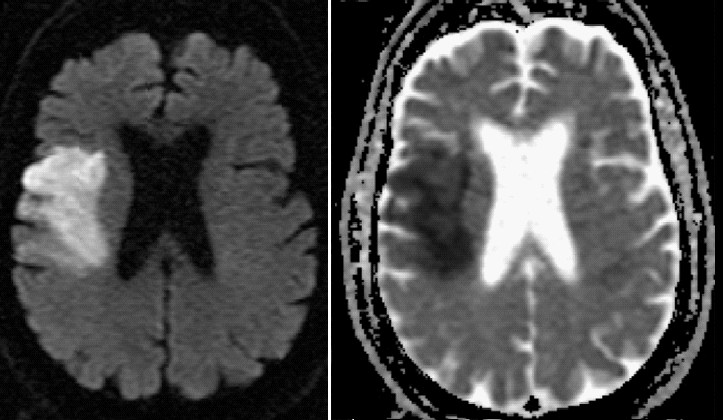
1,000+ patients enrolled across 73 centers in 18 countries - one of the largest global neurostimulation studies ever conducted in acute stroke. Published in The Lancet (2019). In the pre-specified subgroup with imaging evidence of cortical involvement, 50% of patients receiving active stimulation had better-than-expected outcomes at 3 months, versus 40% in the sham group (odds ratio 1.48, p = 0.026) - with a clear dose-response relationship showing outcomes improving up to 70% at mid-range stimulation intensity. The device was confirmed safe, with no difference in mortality or serious adverse events between groups.
This trial generated real knowledge: that a promising technology is safe, that it appears to benefit a specific and identifiable patient population, and that the path to a refined next study is now clearly mapped. That is how science actually works, when it is done with integrity.
The ImpACT-24M trial followed, applying those learnings with the refined optical guidance system. That study was also published in the Stroke journal, also in 2019.
Two Lancet-level publications in the same year, from the same program, built on each other. That does not happen without operational continuity.
What BrainsGate Said
The people who ran the clinical affairs side at BrainsGate described what working on ImpACT-24B actually felt like from the sponsor's side:
"What initially seemed impossible on paper became a smoothly running trial." That phrase is worth sitting with. Not because it is flattering - because it is accurate. There is a version of this trial that does not run smoothly. A version where a site loses its qualification mid-enrollment and that gap takes months to fill. A version where a guidance system failure at a key site isn't handled in time and the data is compromised. A version where coordinator turnover cascades into enrollment gaps and timeline overruns.
Those things didn't happen. Not because this trial was easy. Because the people working on it were experienced enough to see the problems before they arrived, and disciplined enough to do the unglamorous daily work that kept them from materializing.
What This Means for Innovators Considering Complex Trials
If you are developing a drug, device, or therapy that touches acute care - emergency medicine, stroke, cardiac arrest, trauma, sepsis - you are operating in a category where the standard CRO playbook does not apply.
The standard playbook assumes that enrollment is a scheduled activity. That patients can be recruited, screened, and enrolled during clinic hours. That sites can be managed through periodic monitoring visits. That the trial hums along between visits and only requires active intervention when something breaks.
An acute-care trial requires a different kind of organization. One where the infrastructure for continuous readiness is built before the first patient is enrolled. One where the people managing the trial have genuine medical knowledge - not just GCP certification, but clinical understanding of the disease, the procedure, and the setting. One where "responsive" doesn't mean responding within 24 business hours. It means picking up the phone.
Those answers will tell you everything.
Scientific Leadership and Clinical Expertise
Dr. Yoram Solberg, MD, PhD, Chief Medical Officer of aCROss Medical, is a co-author on multiple BrainsGate publications, including the pivotal ImpACT-24B trial published in The Lancet and related studies published in Stroke.
His involvement spans both preclinical and clinical development of sphenopalatine ganglion stimulation for acute ischemic stroke, providing firsthand scientific and operational insight into the development of this innovative neurostimulation technology.
This experience reflects aCROss Medical's broader approach to clinical research: combining medical expertise, scientific rigor, and operational excellence to support sponsors throughout the clinical development process.
aCROss Medical is a physician-led, full-service CRO operating in Georgia, Armenia, Israel, and Uzbekistan. If you are planning a clinical trial that requires more than standard operations - whether it's an acute-care setting, a complex device, an ATMP, or a program where you've had challenges elsewhere - we'd like to hear about it.
References
- BrainsGate. ImpACT-24B Trial: Sphenopalatine Ganglion Stimulation for Acute Ischemic Stroke. The Lancet, 2019. PMID 31133406
- BrainsGate. ImpACT-24M Trial: Refined Optical Guidance for SPG Stimulation in Acute Ischemic Stroke. Stroke, 2019. PMID 31739771
- See our full track record at aCROss Medical Evidence & Published Trials.
Planning an Acute-Care or Complex Trial?
If your program needs more than standard CRO operations, let's talk about what it actually requires.
Discuss Your Study →